Top-rated independent appliance repair across the Southwest
Repair or Replace a Washing Machine
Whether a washer is worth fixing comes down to two things: what broke and how old the machine is. If yours is full of water or walking across the laundry room, that's the question to answer before anyone picks up a wrench. Nobody wants to put money into a machine that quits again in six months. Here's how we think it through, in plain terms.
Call (888) 352-5066- A real person answers
- Open 7 days
- Written quote before work starts
Taking calls until 5:00 PM MST
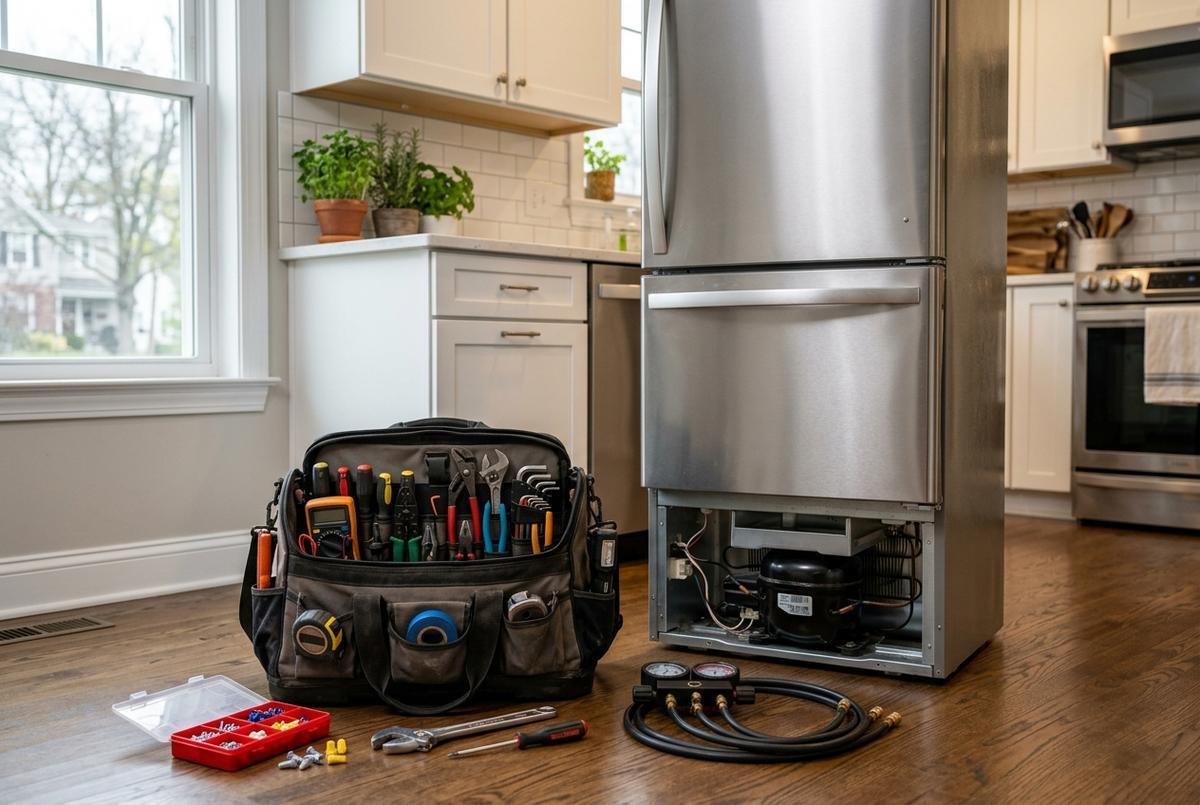
Surprise Appliance Repair service team · field-reviewed before publishing
Age is the first thing we look at
A washer's age tells us a lot, but not everything. Machines under about eight years old usually have plenty of life left, and most failures on them come down to one part. Once a washer passes the ten-to-twelve-year mark, wear starts stacking up. The bearing, the pump, the suspension and the control board all age together, so fixing one worn part on a tired machine sometimes just moves the failure down the line. We'll tell you when that's what we're seeing. Garage washers here in the desert age faster. Summer heat and dust are hard on plastic, seals and electronics, so a nine-year-old garage unit may act older than one kept indoors.
Some faults are small. Some are the whole machine.
The type of failure matters more than the age. A stuck drain pump, a worn inlet valve, a broken lid switch, a torn door boot, a failed drive belt: those are contained repairs on almost any washer. Symptoms tell us which camp we're in. Grinding that gets louder as the drum spins up, or a tub that rocks and thumps hard on spin, often points to bearings or the outer tub. On many front-loaders, that job means splitting the machine apart. Same story with a rusted-through cabinet or a cracked tub. Those are the ones where we usually say replacement makes more sense.
Can we still get the part?
A repair only works if the part exists. Most common washers built in the last decade have good parts availability, including pumps, valves, switches, hoses, belts and boots. Control boards on older or discontinued models get scarce, and some sit on back-order with no clear return date. When a board is the failure and the board is gone, there's no repair to make, no matter how good the rest of the machine looks. Suppliers can also charge more for a rare board than the rest of the machine warrants. We check availability before we recommend anything, so you're not waiting weeks on a part that may never ship.
What we actually do on the visit
We start with what you noticed. When did it change, what cycle, what sound, does it fill, does it drain, does it spin. Then we run the machine and watch it fail. We check the water supply, the drain hose, the leveling and the load balance, because installation issues imitate broken parts more often than people expect. We read error codes if the machine reports them. From there we identify the failed component, confirm we can source it, and lay out what the repair involves. If it's a bad bet, we say so plainly. You get the information. The call is yours.
Cases where replacing is the honest answer
A few situations lean clearly toward a new machine. A cracked outer tub or spider arm on a front-loader. A rusted cabinet where water has been leaking behind the drum a long time. Bearing failure on a washer already past a decade of use. A discontinued control board nobody stocks. Repeat failures in different systems inside the same year, which is a machine telling you it's done. Worth saying too: if you already dislike the washer, if it never cleaned well or the cycles run too long for your household, fixing it just keeps a frustration alive. Call us and we'll help you sort out which case you're in.
Repair or Replace a Washing Machine — common questions
Is it worth fixing a washer that's more than ten years old?
Sometimes. A single small failure, like a pump or valve or switch, is often still worth it. Bearing or tub damage on a machine that age usually isn't. The fault type decides more than the birthday does.
My washer leaks only sometimes. Is that a big repair?
Not usually. Intermittent leaks often trace back to a loose hose clamp, a worn door boot, a cracked fill hose, or an overloaded drum pushing water past the seal. Those are contained, common repairs.
Does the garage heat really shorten a washer's life?
It does. Repeated summer heat hardens rubber seals and hoses, and dust works into moving parts. Garage washers here tend to show wear earlier than the same model kept inside the house.
How it works
- Step 1
Tell us the symptom
Call us or fill in the form and describe what you hear, smell, or see. Water on the floor. A clicking compressor, a burning odor. Small details narrow the cause before anyone drives out.
- Step 2
We schedule the visit
You pick a window that fits your day, and we confirm the make and model so common parts ride along in the van. Tell us if the unit sits in the garage or on the patio. Heat changes what we check first.
- Step 3
Diagnose and repair
Our technician tests the unit, explains what failed, and lays out your options in plain words. Most repairs finish that same visit. If a part has to be ordered, you'll know before we leave.
- A real person answers
- Open 7 days
- Written quote before work starts
Why homeowners call us
- Built for desert heatSummer here punishes appliances. Compressors run long, coils choke on fine dust, and garage refrigerators fight ambient air near 115 degrees. We look for heat-driven failures first, because that's usually where the trouble started.
- Any major brandWe work as an independent company on all major residential brands: refrigerators, washers, dryers, dishwashers, ranges, ovens, and freezers. One crew handles both the kitchen and the laundry room, so you aren't juggling separate calls.
- Straight explanationsYou hear what part failed and why, without a wall of jargon. If a repair doesn't make sense on an aging unit, we say that too. Then you're deciding with real information instead of guesswork.
- Six-state coverageFrom Surprise out across the Southwest, our service area covers six states. The approach doesn't change from town to town: careful diagnosis, a tidy work area, and a clear plan before we start pulling anything apart.
- All major brands, gas & electricEvery major appliance brand, gas and electric, handled by an independent shop.
- Straight answersIf it isn't worth repairing, we'll say so, often right on the phone.
About this guide
Checked everything on the list and it still acts up?
Tell us what you tried and what it did. The booking itself takes a minute.
- A real person answers
- Open 7 days
- Written quotes
- All major brands
- Gas & electric
Rather not call? Get a free quote →