Top-rated independent appliance repair across the Southwest
How Hard Water Quietly Shortens an Appliance's Life
Hard water damage in appliances is preventable, and the fix is a regular descaling cycle before parts start failing. Your dishwasher leaves a white film, the coffee maker takes forever, and the washer's hot side seems weaker every year. Nothing is broken yet, so you keep using it. That's how hard water works out here in the desert. It doesn't break an appliance in one day. It builds up, quietly, until a heating element or valve quits.
Call (888) 352-5066- A real person answers
- Open 7 days
- Written quote before work starts
Taking calls until 5:00 PM MST
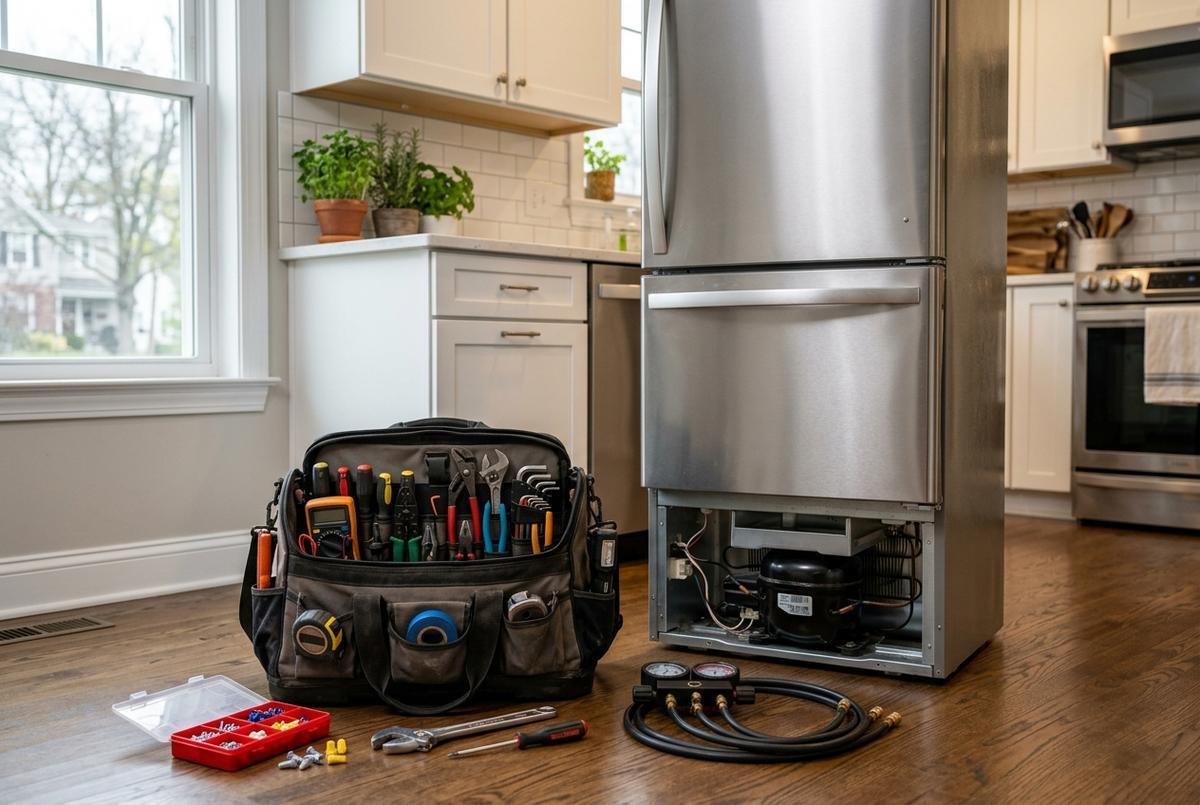
Surprise Appliance Repair service team · field-reviewed before publishing
What the minerals actually do inside your machines
Southwest tap water carries a lot of dissolved calcium and magnesium. When water gets heated or evaporates, those minerals stay behind as scale, a hard chalky crust. It coats dishwasher heating elements, water heater tanks, ice maker lines, washer inlet screens, and the steam vents in ovens. A coated element has to push heat through that crust, so it runs hotter and fails earlier. Narrow water lines slowly close up, and valves stop sealing because grit sits on the rubber. None of this shows up as a warning light. It shows up as an appliance that suddenly won't heat or fill.
The habit that prevents most of it
Run a plain descaling cycle with white vinegar or a citric-acid appliance cleaner. In the dishwasher, put a cup of vinegar in a bowl on the top rack, nothing else loaded, and run the hottest cycle. In the washer, run a hot empty cycle with whatever cleaner your manual allows. For the coffee maker and ice maker, follow the vinegar-and-rinse steps in the manual. Then do the easy mechanical stuff. Wipe the dishwasher door gasket, pull and rinse the filter basket at the tub floor, and check the washer's fill hose screens with the hoses off and the water shut off. That's it. No panels come off.
How often, realistically
With hard desert water, plan on descaling the dishwasher every month or two. Washer, once a quarter. Coffee maker, monthly if you brew daily. Ice maker, follow the manual, usually every six months, with a filter change on the same schedule. Rinse the dishwasher filter every couple of weeks, because food plus scale makes a cement-like paste down there. A softener lets you stretch these intervals, but don't skip them, since softened water still leaves some residue. Write the dates on a piece of tape inside a cabinet door. That beats trying to remember.
Signs prevention time has passed
Cloudy glasses that don't clear after a vinegar cycle mean the scale is on the element, not the dishes. Dishes coming out cool and wet point at a heating element that's already struggling. A washer that takes many minutes to fill, or fills on cold only, usually has a clogged inlet screen or a valve that won't close. Small, hollow, or stale-smelling ice cubes suggest a restricted line. Water heaters with heavy scale rumble and pop when they heat. Once you hear or feel these things, cleaning alone rarely fixes it. A part needs testing or replacing.
When to call us
If an appliance no longer heats, no longer fills, or leaks after a descale, stop running it and call. Repeated cycles on a failing element or a stuck valve can turn one part into three. Same goes for standing water in the dishwasher tub that won't drain, or a burning smell during a heat cycle. Unplug it and leave it alone. We repair all major brands as an independent shop, and we work on garage units that live through 115-degree summers, which is its own kind of stress. Call us and describe the symptom. That tells us what to bring.
How Hard Water Quietly Shortens an Appliance's Life — common questions
Will a whole-home water softener save my appliances?
It helps a lot. Softened water lays down far less scale on heating elements and valves. It isn't a free pass, though. Keep descaling and changing filters, just on a longer schedule than untreated water needs.
Is vinegar safe for my dishwasher and washer?
Occasional use in an empty machine is generally fine and common practice. Check your manual first, since a few makers prefer a citric-acid cleaner instead. Never mix vinegar with bleach or detergent in the same cycle.
Can you clean the scale out instead of replacing the part?
Sometimes. Light buildup on a screen or filter cleans up well. Once an element has burned out or a valve won't seal, cleaning won't bring it back. We test the part and tell you which situation you're in.
How it works
- Step 1
Tell us the symptom
Call us or fill in the form and describe what you hear, smell, or see. Water on the floor. A clicking compressor, a burning odor. Small details narrow the cause before anyone drives out.
- Step 2
We schedule the visit
You pick a window that fits your day, and we confirm the make and model so common parts ride along in the van. Tell us if the unit sits in the garage or on the patio. Heat changes what we check first.
- Step 3
Diagnose and repair
Our technician tests the unit, explains what failed, and lays out your options in plain words. Most repairs finish that same visit. If a part has to be ordered, you'll know before we leave.
- A real person answers
- Open 7 days
- Written quote before work starts
Why homeowners call us
- Built for desert heatSummer here punishes appliances. Compressors run long, coils choke on fine dust, and garage refrigerators fight ambient air near 115 degrees. We look for heat-driven failures first, because that's usually where the trouble started.
- Any major brandWe work as an independent company on all major residential brands: refrigerators, washers, dryers, dishwashers, ranges, ovens, and freezers. One crew handles both the kitchen and the laundry room, so you aren't juggling separate calls.
- Straight explanationsYou hear what part failed and why, without a wall of jargon. If a repair doesn't make sense on an aging unit, we say that too. Then you're deciding with real information instead of guesswork.
- Six-state coverageFrom Surprise out across the Southwest, our service area covers six states. The approach doesn't change from town to town: careful diagnosis, a tidy work area, and a clear plan before we start pulling anything apart.
- All major brands, gas & electricEvery major appliance brand, gas and electric, handled by an independent shop.
- Straight answersIf it isn't worth repairing, we'll say so, often right on the phone.
About this guide
If the safe checks didn't fix it, the fault is real
Tell us what you tried and what it did. The booking itself takes a minute.
- A real person answers
- Open 7 days
- Written quotes
- All major brands
- Gas & electric
Rather not call? Get a free quote →