Top-rated independent appliance repair across the Southwest
When a Washer Won't Drain or Spin
A washer that finishes with a tub full of water almost always has a drain problem, a lid or door switch problem, or a drive fault, and we can tell which one. Maybe the clothes came out soaked and heavy, sitting in a puddle at the bottom. The cycle ran, but nothing spun out. This is one of the more common calls we get, and it usually comes down to a handful of causes. Here's how to sort out what you're dealing with.
Call (888) 352-5066- A real person answers
- Open 7 days
- Written quote before work starts
Taking calls until 5:00 PM MST
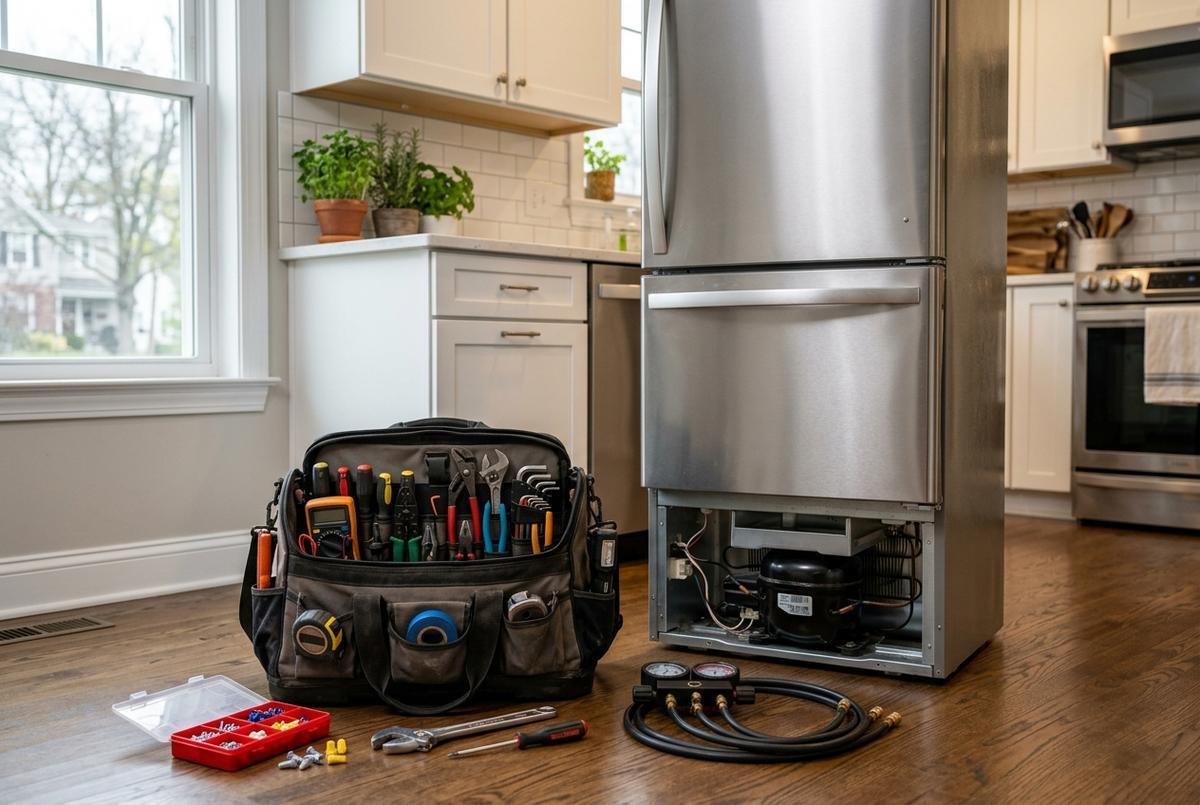
Surprise Appliance Repair service team · field-reviewed before publishing
What a full tub after the cycle actually tells you
Draining and spinning are linked. Most washers won't spin until the water is gone, because the machine checks the water level first, so a no-spin complaint is often really a no-drain problem. If you hear the pump hum but the water sits, something is blocking flow. Hear nothing at all after the wash, and the pump may not be getting a signal, or it may be dead. If the water drains fine but the drum never picks up speed, that points somewhere else entirely, either the drive system or the lid lock.
The cheap stuff first: hoses, filters, and overload
Start with the drain hose. Kinked behind the machine, crushed against a wall, or pushed too far down the standpipe, and water can't leave. Lint, coins, and socks collect in the filter or pump inlet on many models. Front-loaders often have a small access filter near the bottom front, so check your manual. Overloading matters too. A tangled comforter throws the drum off balance, and the washer will slow down or quit spinning to protect itself. In Arizona garages, dust and lint pile up around the base and behind the machine faster than people expect.
Pump, lid switch, and drive: the usual failures
Drain pumps wear out. They also jam on a coin or a bra wire, which sounds like a buzz or a grind. Lid switches and door locks are safety parts, and if the machine can't confirm the lid is shut and latched, it won't spin. A door that won't latch firmly is a real clue. On belt-drive models, a stretched or broken belt means the motor runs while the drum sits still. Top-loaders with a clutch or transmission problem may agitate but never reach spin speed. Control board and timer faults happen, but they're further down the list.
Safe checks you can do right now
Unplug the washer before touching anything behind it. Pull the machine out and look at the drain hose along its whole length for kinks or crush points. Make sure the hose end sits in the standpipe rather than shoved deep into it. Check that the lid or door closes with a solid click. Redistribute a heavy load by hand and restart on a spin-only cycle. If your model has a front filter door, drain it into a shallow pan. It will be more water than you think. Skip anything that requires removing a panel or reaching near the motor. Those parts hold stored energy and moving hazards.
What we do that's different
We put the machine in diagnostic or service mode and command the pump directly. That tells us in seconds whether the pump is dead, jammed, or simply never told to run. We meter the lid switch and door lock instead of guessing. We check pump amp draw, look at the drain path from inside the tub, and inspect the belt and clutch with the cabinet open safely. Heat matters here too. Garage washers in a 115-degree summer run hot, and pump motors and control boards fail sooner. If you're stuck with a tub full of water, call us and we'll sort out which part actually failed.
When it is time to book
When a Washer Won't Drain or Spin — common questions
Can I drain the washer myself before you arrive?
Yes. Unplug it, then lower the drain hose into a bucket set below the tub level. Gravity does the rest. Go slow and swap buckets. It keeps water off your floor and makes the repair easier.
Why does my washer drain but still not spin?
That usually points to the lid switch, door lock, drive belt, or clutch. The pump is doing its job. Something is stopping the drum from reaching speed, or telling the machine it isn't safe to spin.
Is a no-spin washer worth repairing?
Often yes. Pumps, belts, and lid switches are common wear parts and straightforward to replace. We'll tell you what failed and how the rest of the machine looks, then you decide.
How it works
- Step 1
Tell us the symptom
Call us or fill in the form and describe what you hear, smell, or see. Water on the floor. A clicking compressor, a burning odor. Small details narrow the cause before anyone drives out.
- Step 2
We schedule the visit
You pick a window that fits your day, and we confirm the make and model so common parts ride along in the van. Tell us if the unit sits in the garage or on the patio. Heat changes what we check first.
- Step 3
Diagnose and repair
Our technician tests the unit, explains what failed, and lays out your options in plain words. Most repairs finish that same visit. If a part has to be ordered, you'll know before we leave.
- A real person answers
- Open 7 days
- Written quote before work starts
Why homeowners call us
- Built for desert heatSummer here punishes appliances. Compressors run long, coils choke on fine dust, and garage refrigerators fight ambient air near 115 degrees. We look for heat-driven failures first, because that's usually where the trouble started.
- Any major brandWe work as an independent company on all major residential brands: refrigerators, washers, dryers, dishwashers, ranges, ovens, and freezers. One crew handles both the kitchen and the laundry room, so you aren't juggling separate calls.
- Straight explanationsYou hear what part failed and why, without a wall of jargon. If a repair doesn't make sense on an aging unit, we say that too. Then you're deciding with real information instead of guesswork.
- Six-state coverageFrom Surprise out across the Southwest, our service area covers six states. The approach doesn't change from town to town: careful diagnosis, a tidy work area, and a clear plan before we start pulling anything apart.
- All major brands, gas & electricEvery major appliance brand, gas and electric, handled by an independent shop.
- Straight answersIf it isn't worth repairing, we'll say so, often right on the phone.
About this guide
If the safe checks didn't fix it, the fault is real
Tell us what you tried and what it did. The booking itself takes a minute.
- A real person answers
- Open 7 days
- Written quotes
- All major brands
- Gas & electric
Rather not call? Get a free quote →