Top-rated independent appliance repair across the Southwest
How the Seasons Wear on Home Appliances
We repair refrigerators, washers, dryers, ovens, and dishwashers across the Surprise area, so call us if something's already slipping. Here's the part homeowners don't expect: desert weather breaks appliances on a schedule. Your fridge ran fine in March. Now it's July, the garage is 115 degrees, and the freezer is soft. Below is what tends to fail in each season, plus the checks worth doing before that season lands on you.
Call (888) 352-5066- A real person answers
- Open 7 days
- Written quote before work starts
Taking calls until 5:00 PM MST
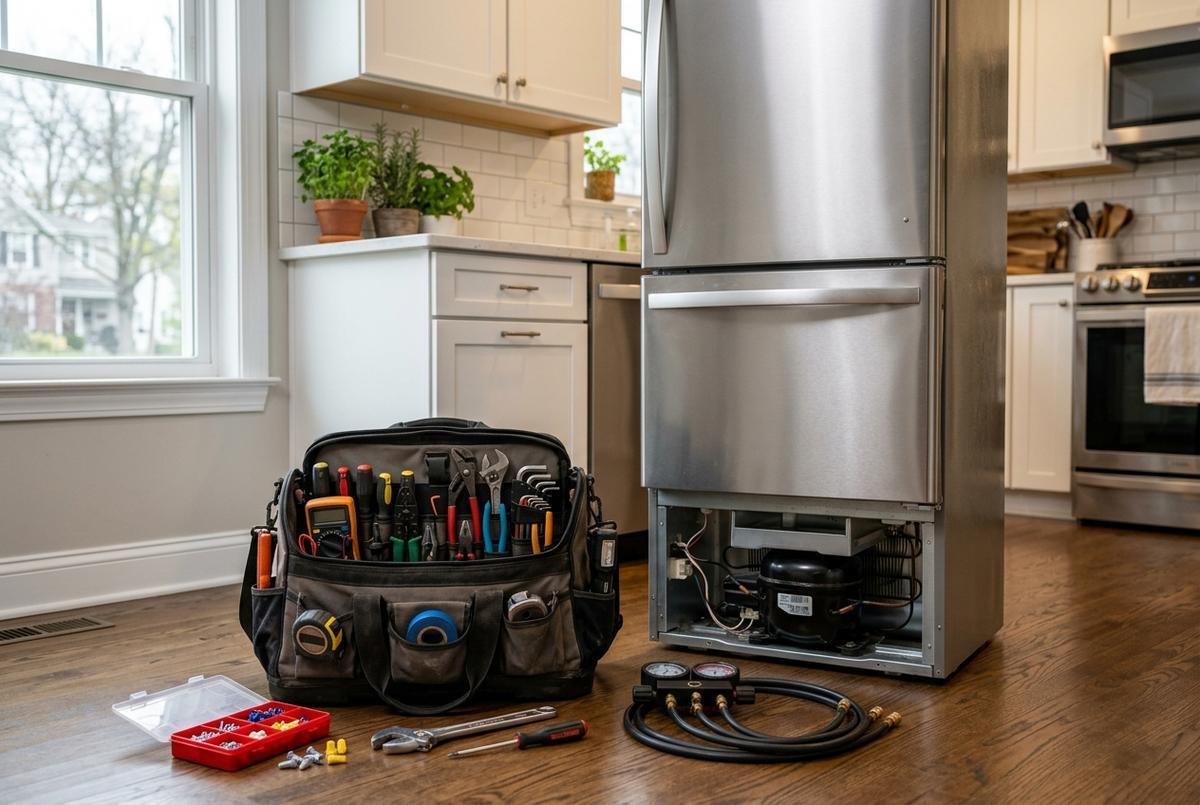
Surprise Appliance Repair service team · field-reviewed before publishing
Summer: heat is the main enemy
From May through September, refrigerator and freezer compressors run nearly nonstop. A garage fridge sitting in 115-degree air has to dump heat into air hotter than the food it's cooling. That's when we see warm freezers, ice cream that won't set, and compressors cycling short and loud. Indoors it shows up too, because kitchens run hotter and the dishwasher and oven add heat the fridge has to fight. Give the fridge breathing room. Pull it out a few inches from the wall and clear the boxes off the top. If a garage unit struggles every July, it's probably undersized for the space rather than broken.
Dust season: coils, vents, and filters
Wind events and dry ground push fine dust into everything. Condenser coils on refrigerators pick up a gray felt that acts like a blanket, so the compressor runs longer, food gets warmer, and parts wear faster. Dryer vents collect lint plus outside dust, which slows airflow and stretches drying times. Two safe checks. Vacuum the visible coils at the bottom or back grille of the fridge with a brush attachment, then disconnect the dryer's flexible duct and clear it. Both are outside-the-cabinet jobs. Do them twice a year. Spring after wind season, fall before the holidays, and you've got an easy rhythm.
Monsoon: power surges and humidity swings
Late summer storms bring voltage sags and surges, and control boards are the usual casualty. A washer that won't start the morning after a storm, an oven display gone dark, or an ice maker that stopped mid-cycle often traces back to a power event. Humidity spikes matter too. Dryers take longer, and refrigerator door gaskets sweat and drip. If storms are forecast and you'll be out, unplugging small countertop appliances costs nothing. For the big units, a whole-home surge device installed by an electrician is the practical answer. When something dies right after a storm, tell us that on the call to us. It narrows the diagnosis fast.
Winter and spring: the quiet stress
Cold nights hit garage appliances from the other direction. Some refrigerators in unheated garages stop running because the thermostat senses cold air and figures the box is already cool. The freezer thaws while the fridge section stays fine, which confuses people every January. Garage-ready models handle it. Older ones often don't. Spring is when heavy use returns, washers see more loads, and a slow drain or a rocking cabinet finally shows itself. Level the machine. Check that the drain hose isn't kinked behind it, then run an empty hot cycle with washer cleaner to clear buildup from winter's low-use months.
A short pre-season checklist
Before summer, vacuum the refrigerator coils and verify the door seal grips a dollar bill. Confirm the garage unit has clearance on all sides. Before monsoon, know where your breaker panel is and think about surge protection. Before winter, check whether your garage refrigerator is rated for cold ambient temperatures. Year-round, clean the dryer lint screen every load and the duct twice a year. Mostly, listen for changes. A new hum, a longer run time, or a fridge that never seems to shut off usually shows up weeks before a full failure, and that's the cheapest time to call us. We repair all major brands as an independent shop.
How the Seasons Wear on Home Appliances — common questions
Why does my garage refrigerator fail every summer?
It's fighting air hotter than its own design range. The compressor runs almost continuously and still loses ground, and dusty coils make it worse. Clean coils and clearance help. Some units simply aren't built for 115-degree ambient air.
How often should I clean refrigerator coils here?
Twice a year fits most desert homes. Once in spring after wind season, once in fall. Add a third cleaning if you have shedding pets, or if the unit sits in a garage or dusty utility room.
My appliance quit right after a monsoon storm. What happened?
Usually a control board took a voltage hit. Displays go dark, cycles stop mid-run, or the unit won't start at all. Mention the storm when you call us so we check power-related components first.
How it works
- Step 1
Tell us the symptom
Call us or fill in the form and describe what you hear, smell, or see. Water on the floor. A clicking compressor, a burning odor. Small details narrow the cause before anyone drives out.
- Step 2
We schedule the visit
You pick a window that fits your day, and we confirm the make and model so common parts ride along in the van. Tell us if the unit sits in the garage or on the patio. Heat changes what we check first.
- Step 3
Diagnose and repair
Our technician tests the unit, explains what failed, and lays out your options in plain words. Most repairs finish that same visit. If a part has to be ordered, you'll know before we leave.
- A real person answers
- Open 7 days
- Written quote before work starts
Why homeowners call us
- Built for desert heatSummer here punishes appliances. Compressors run long, coils choke on fine dust, and garage refrigerators fight ambient air near 115 degrees. We look for heat-driven failures first, because that's usually where the trouble started.
- Any major brandWe work as an independent company on all major residential brands: refrigerators, washers, dryers, dishwashers, ranges, ovens, and freezers. One crew handles both the kitchen and the laundry room, so you aren't juggling separate calls.
- Straight explanationsYou hear what part failed and why, without a wall of jargon. If a repair doesn't make sense on an aging unit, we say that too. Then you're deciding with real information instead of guesswork.
- Six-state coverageFrom Surprise out across the Southwest, our service area covers six states. The approach doesn't change from town to town: careful diagnosis, a tidy work area, and a clear plan before we start pulling anything apart.
- All major brands, gas & electricEvery major appliance brand, gas and electric, handled by an independent shop.
- Straight answersIf it isn't worth repairing, we'll say so, often right on the phone.
About this guide
Checked everything on the list and it still acts up?
Tell us what you tried and what it did. The booking itself takes a minute.
- A real person answers
- Open 7 days
- Written quotes
- All major brands
- Gas & electric
Rather not call? Get a free quote →