Top-rated independent appliance repair across the Southwest
Dryer Runs But Never Gets Hot
A dryer that tumbles without heating usually has a break somewhere in the heat chain, not the motor, and that's a repair we handle every week. If the drum spins and you hear the motor but clothes come out damp and cool hour after hour, the drive side is fine. We see this a lot on garage units baking through Arizona summers. Here is how we work through it.
Call (888) 352-5066- A real person answers
- Open 7 days
- Written quote before work starts
Taking calls until 5:00 PM MST
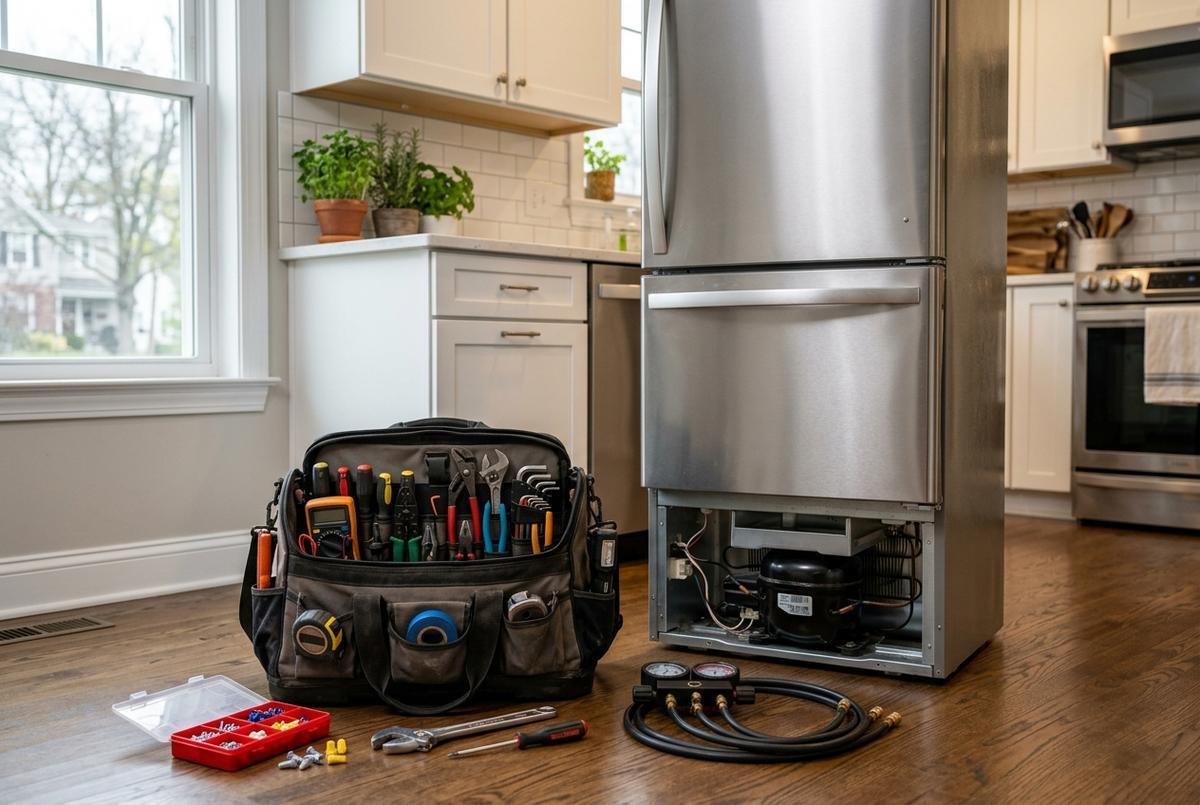
Surprise Appliance Repair service team · field-reviewed before publishing
What "runs but no heat" actually tells us
Your dryer has two jobs: turn the drum and make heat. Those are separate systems. When the drum turns, the motor, belt, and start switch are all doing their part, so we stop looking there. The heat side is a chain. Power comes in, a control calls for heat, an element or gas burner makes it, and safety devices shut heat off if air stops moving. Break any link and you get cool tumbling. Air movement matters more than people expect. If hot air cannot leave the machine, a safety part cuts the heat on purpose. That is the machine protecting itself, not failing.
Cause one: blocked airflow (start here, it's the cheapest)
Lint is the usual suspect. It packs the lint screen, the duct behind the dryer, and the vent hood outside. Around here dust and desert grit make it worse, and long garage vent runs collect more of it. When air slows, heat builds where it should not. A thermal fuse or limit switch opens and kills heat, sometimes for good. Signs point this way: very long dry times before the heat quit, a hot cabinet, a vent hood flap that never moves, or a crushed foil duct behind the machine. Clearing the vent is homeowner work, and it often solves the whole thing.
Cause two: a tripped or blown safety part
After a blockage, the parts that reacted to it usually need replacing. Thermal fuses are one-time devices. Once open, they stay open, even after you clean the vent. High-limit thermostats and cycling thermostats can fail closed or open too. Electric dryers have another wrinkle: they use two legs of 240-volt power. Lose one leg at the breaker and the drum still spins on 120 volts while heat never comes on. That is why we ask whether a breaker has tripped, or whether the dryer shares a panel with something that keeps popping.
Cause three: the heat source itself
Electric dryers use a coiled heating element. Coils break from age and heat cycling. When one breaks you get exactly your symptom, normal tumbling and zero warmth. Gas dryers use an igniter, a gas valve, and a flame sensor. A weak igniter or a lazy valve gives you no flame, or a flame that lights once and never comes back. Control boards and timers can also stop calling for heat, though that is less common than the parts above. All of this sits behind panels, near 240-volt terminals or a gas connection. We do not ask homeowners to open those. Call us instead: us.
What you can safely check, and what we do differently
Safe for you: pull the lint screen and rinse it, check that the flexible duct behind the dryer is not crushed or kinked, walk outside and watch the vent hood while the dryer runs, feel for weak or no exhaust, and look at your breaker panel for a tripped double breaker. Reset it once. If it trips again, stop. What we bring is measurement. We test continuity on fuses and thermostats, check both legs of incoming power under load, read element resistance, watch a gas burner light in real time, and measure actual airflow instead of guessing. Then we replace only the failed part.
Dryer Runs But Never Gets Hot — common questions
Can a clogged vent really stop the heat completely?
Yes. Restricted air makes the dryer overheat inside, and a thermal fuse opens to shut heat off. The drum keeps spinning. Cleaning the vent is step one, but the blown fuse still needs replacing.
My garage dryer worked all winter and quit in July. Why?
Garage air can hit well over 100 degrees here. A dryer already fighting a partly blocked vent has no margin left in that heat. Summer is when marginal airflow finally trips a safety device.
Is it worth repairing or should I replace the dryer?
Depends on age and what failed. Elements, fuses, and thermostats are routine repairs on a sound machine. We tell you what we found and let you decide. Call us to get it diagnosed.
How it works
- Step 1
Tell us the symptom
Call us or fill in the form and describe what you hear, smell, or see. Water on the floor. A clicking compressor, a burning odor. Small details narrow the cause before anyone drives out.
- Step 2
We schedule the visit
You pick a window that fits your day, and we confirm the make and model so common parts ride along in the van. Tell us if the unit sits in the garage or on the patio. Heat changes what we check first.
- Step 3
Diagnose and repair
Our technician tests the unit, explains what failed, and lays out your options in plain words. Most repairs finish that same visit. If a part has to be ordered, you'll know before we leave.
- A real person answers
- Open 7 days
- Written quote before work starts
Why homeowners call us
- Built for desert heatSummer here punishes appliances. Compressors run long, coils choke on fine dust, and garage refrigerators fight ambient air near 115 degrees. We look for heat-driven failures first, because that's usually where the trouble started.
- Any major brandWe work as an independent company on all major residential brands: refrigerators, washers, dryers, dishwashers, ranges, ovens, and freezers. One crew handles both the kitchen and the laundry room, so you aren't juggling separate calls.
- Straight explanationsYou hear what part failed and why, without a wall of jargon. If a repair doesn't make sense on an aging unit, we say that too. Then you're deciding with real information instead of guesswork.
- Six-state coverageFrom Surprise out across the Southwest, our service area covers six states. The approach doesn't change from town to town: careful diagnosis, a tidy work area, and a clear plan before we start pulling anything apart.
- All major brands, gas & electricEvery major appliance brand, gas and electric, handled by an independent shop.
- Straight answersIf it isn't worth repairing, we'll say so, often right on the phone.
About this guide
If the safe checks didn't fix it, the fault is real
Mention which checks you ran when you book; it speeds up the visit.
- A real person answers
- Open 7 days
- Written quotes
- All major brands
- Gas & electric
Rather not call? Get a free quote →