Top-rated independent appliance repair across the Southwest
A Refrigerator That Won't Cool
If your refrigerator runs but won't cool, call us and we'll diagnose it. Milk tastes off, the freezer still makes ice, but the fridge side feels like a cool closet. Or the whole box is warm and the light still comes on. That's a specific complaint, and it points at a short list of parts. Here's what it usually means in a desert house and what you can safely check first.
Call (888) 352-5066- A real person answers
- Open 7 days
- Written quote before work starts
Taking calls until 5:00 PM MST
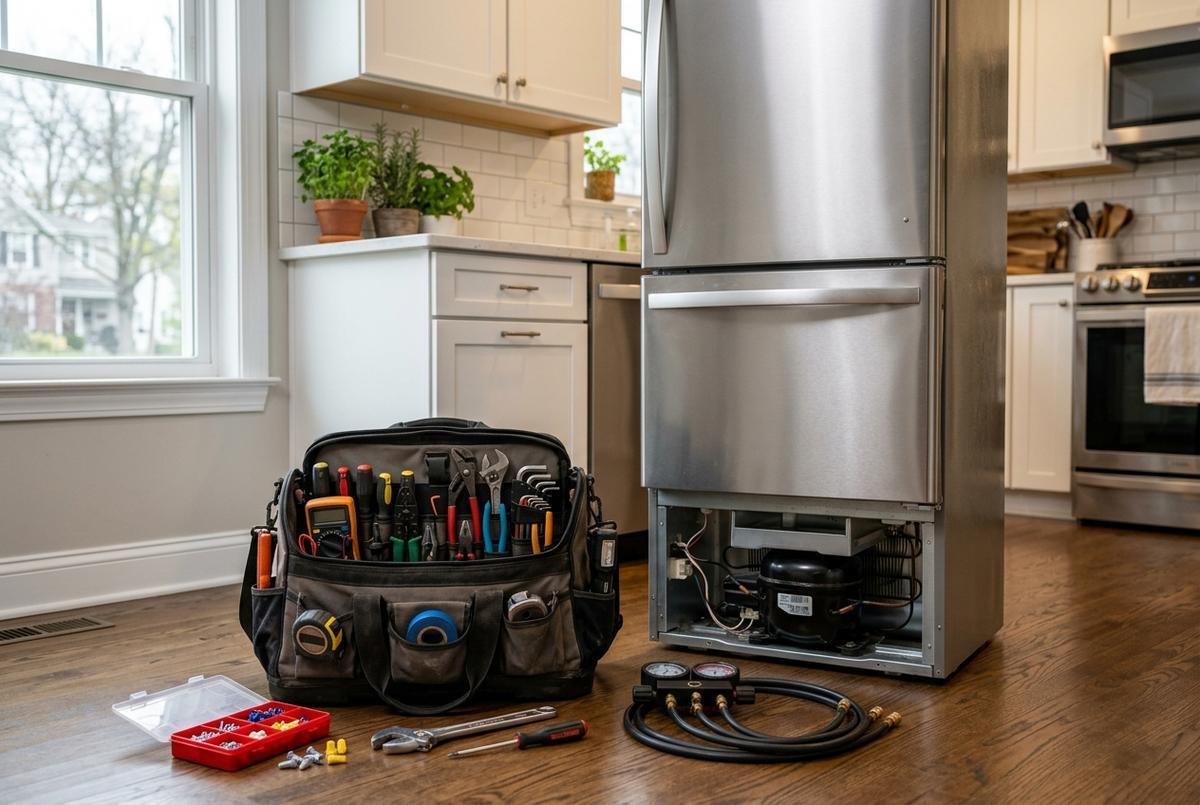
Surprise Appliance Repair service team · field-reviewed before publishing
What "not cooling" actually tells us
There's a difference between a fridge that's dead quiet and one that's humming along at room temperature. Quiet and warm points to power, a control board, or a compressor that won't start. Running and warm usually means cold is being made but not moved, or not made well enough. And fresh food warm while the freezer stays hard-frozen is a different problem than both sides drifting up together. That split points at airflow between the two compartments. When you call us, tell us which one you've got. It narrows the list before we ever pull the truck in.
Dust, heat, and dirty coils
This is the cheapest cause and the one we see most out here. Condenser coils dump heat out of the box. When they're packed with dust, pet hair, and fine desert grit, that heat has nowhere to go. The compressor runs longer and longer and still loses ground. Add a garage that hits 115 and a fridge rated for normal room temperature, and it simply cannot keep up. Signs: the sides or back feel hot, the unit runs almost nonstop, and the freezer is soft instead of rock hard. Cleaning the coils you can reach and opening up space around the unit sometimes fixes it outright.
Airflow, frost, and the defrost system
Cold air gets made in one place and blown where it's needed. If the evaporator fan stops, or ice builds up over the evaporator coil, that air stops moving. The classic pattern is a freezer that's still cold, a warm fridge section, and either silence or a rattling fan behind the freezer wall. A failed defrost heater, thermostat, or timer lets frost pile up until the coil is blocked solid. Overpacked shelves and blocked vents inside the box do the same thing for free. Leave it unplugged a day, the ice melts, cooling comes back, then it fails again. That repeat cycle is the tell.
Sealed system and controls
Past coils and fans, you're into parts we handle with gauges and meters. A refrigerant leak means the compressor runs constantly and barely cools. A failed start relay means it tries, clicks, and quits every few minutes. Control boards and temperature sensors can read the box wrong and never call for cooling at all. None of that is homeowner work. It involves sealed lines, stored electrical charge, and factory diagnostics. If the coils are clean and the vents are clear and the box is still warm, stop there and call us instead of buying parts on a hunch.
Safe checks before you call, and what we do next
Plug something else into the outlet and confirm it works. Check the temperature dials, since kids and grocery bags move them. Make sure the doors seal and nothing is holding one cracked open. Pull items away from the rear vents inside. Vacuum whatever coil surface you can reach from the front grille or the back, and look for water or ice on the freezer floor. That's the safe list. On our end we measure actual compartment temperatures, test the fans and defrost components electrically, check how the refrigerant is behaving, and read error codes. We're an independent shop and we repair all major brands. Call us with what you found.
A Refrigerator That Won't Cool — common questions
Can a fridge in the garage survive an Arizona summer?
Only if it was built for it. Standard units are rated for cooler ambient temperatures and will run nonstop or quit cooling above roughly 110 degrees. Shade, clearance, and clean coils help some. A garage-ready model helps more.
Freezer is fine but the fridge is warm. Why?
Almost always airflow. The evaporator fan may have quit, or frost has blocked the coil that feeds cold air forward. Blocked interior vents do the same thing. It takes a diagnosis, not a guess.
Should I unplug it overnight to fix the ice?
That thaws the frost, and cooling usually comes back for a few days. It doesn't repair whichever defrost part failed. Use it to save your food, then have the real cause found.
How it works
- Step 1
Tell us the symptom
Call us or fill in the form and describe what you hear, smell, or see. Water on the floor. A clicking compressor, a burning odor. Small details narrow the cause before anyone drives out.
- Step 2
We schedule the visit
You pick a window that fits your day, and we confirm the make and model so common parts ride along in the van. Tell us if the unit sits in the garage or on the patio. Heat changes what we check first.
- Step 3
Diagnose and repair
Our technician tests the unit, explains what failed, and lays out your options in plain words. Most repairs finish that same visit. If a part has to be ordered, you'll know before we leave.
- A real person answers
- Open 7 days
- Written quote before work starts
Why homeowners call us
- Built for desert heatSummer here punishes appliances. Compressors run long, coils choke on fine dust, and garage refrigerators fight ambient air near 115 degrees. We look for heat-driven failures first, because that's usually where the trouble started.
- Any major brandWe work as an independent company on all major residential brands: refrigerators, washers, dryers, dishwashers, ranges, ovens, and freezers. One crew handles both the kitchen and the laundry room, so you aren't juggling separate calls.
- Straight explanationsYou hear what part failed and why, without a wall of jargon. If a repair doesn't make sense on an aging unit, we say that too. Then you're deciding with real information instead of guesswork.
- Six-state coverageFrom Surprise out across the Southwest, our service area covers six states. The approach doesn't change from town to town: careful diagnosis, a tidy work area, and a clear plan before we start pulling anything apart.
- All major brands, gas & electricEvery major appliance brand, gas and electric, handled by an independent shop.
- Straight answersIf it isn't worth repairing, we'll say so, often right on the phone.
About this guide
If the safe checks didn't fix it, the fault is real
Report what you saw during the checks and we handle the rest. A minute to book.
- A real person answers
- Open 7 days
- Written quotes
- All major brands
- Gas & electric
Rather not call? Get a free quote →