Top-rated independent appliance repair across the Southwest
Fixable Freezer Faults, and the Ones That End a Freezer
If your freezer is warming up, we can usually tell you within one visit whether it's a repair or a replacement. Softened ice cream, frost building on the walls, or a cabinet gone completely silent all point in different directions. We sort fixable from finished in plain terms so you can decide before the food thaws.
Call (888) 352-5066- A real person answers
- Open 7 days
- Written quote before work starts
Taking calls until 5:00 PM MST
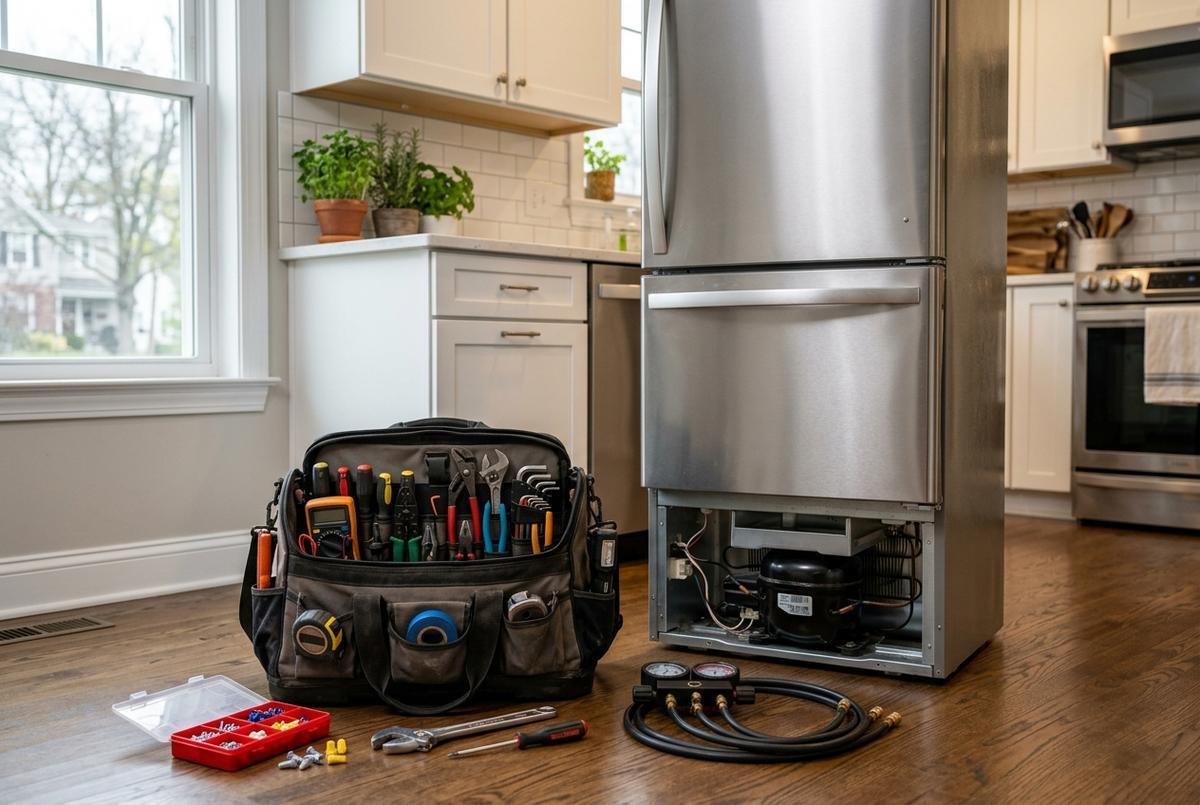
Surprise Appliance Repair service team · field-reviewed before publishing
Age matters, but not the way you think
A freezer's age tells us what parts still exist and how hard the sealed system has been worked. Chest freezers are simple machines. Many run twenty years or more, and a fifteen-year-old chest freezer with a bad lid gasket or a failed thermostat is usually worth fixing. Uprights with auto-defrost have more parts to fail, so more things go wrong, but most of those parts are common. Age becomes a real problem when the compressor is worn and the cabinet foam has soaked up moisture. In desert garages, a unit that ran wide open through ten summers has more hours on it than the label suggests.
Fault type tells us most of the story
We split faults into two piles. Outside the sealed system: thermostats, defrost timers, defrost heaters, evaporator fans, door gaskets, lid hinges, start relays, control boards, drain lines. Those are repairs, and they cover most calls we run. Inside the sealed system you get a refrigerant leak, a blocked capillary, or a compressor that has lost its pumping ability. Those repairs are involved, and on a small freezer they often don't add up. Frost on one wall, water pooling, or a freezer that runs constantly at 20 degrees usually points at the fixable pile. Warm and silent with no hum points the other way.
Parts availability draws a hard line
We check part numbers before we promise anything. Gaskets, thermostats, fans, and heaters are widely stocked for common chest and upright models. Electronic control boards on discontinued uprights are where things stall. When a board is no longer made and there's no rebuild option, the repair ends there no matter how good the rest of the machine looks. Older mechanical freezers are easier here, since the parts are generic. If a component is backordered with no clear date, we say so out loud instead of leaving you waiting on a freezer full of meat.
What we actually do during the visit
First we confirm the freezer is getting power and the outlet works. Garage circuits trip more than people expect. Then we read the cabinet temperature, feel the airflow, and check the door or lid seal with a paper test. We look at the condenser coils, which in Arizona homes are often packed with dust and lint that chokes cooling. We listen to the compressor. We check the drain and the defrost cycle. From there we can tell you the failed part, whether it's available, and whether the sealed system is sound. Then the decision is yours, with real information behind it.
Honest cases where a new freezer wins
Some calls we recommend replacing. A small chest freezer with a dead compressor is one. A cabinet with a rusted-through floor, or crushed insulation after a water event, is another, because that unit will sweat and never hold temperature. Freezers that have already had a sealed-system repair and failed again get the same answer. Same with any unit where the needed board is discontinued. And if the freezer is old, undersized for your household, and living in an unconditioned garage that hits 115 degrees, a newer high-efficiency model handles that heat better. Call us and we'll tell you which category yours is in.
When it is time to book
Related guides
Fixable Freezer Faults, and the Ones That End a Freezer — common questions
My garage freezer struggles every July. Is it broken?
Maybe not. Many freezers are rated for a limited ambient range, and in extreme heat they run nearly nonstop. Clean coils help a lot. If it still can't hold temperature, we'll check whether it's a fault or a limit.
Is frost buildup a repair or normal?
Light frost in a manual-defrost chest freezer is normal and needs an occasional defrost. Heavy frost on one wall, or ice returning within days in an auto-defrost upright, usually means a defrost heater, thermostat, or door seal problem.
How long until I know if it's fixable?
Usually within the first visit. Temperature readings, coil condition, a seal test, and how the compressor behaves tell us the fault. The remaining question is part availability, which we check while we're there.
How it works
- Step 1
Tell us the symptom
Call us or fill in the form and describe what you hear, smell, or see. Water on the floor. A clicking compressor, a burning odor. Small details narrow the cause before anyone drives out.
- Step 2
We schedule the visit
You pick a window that fits your day, and we confirm the make and model so common parts ride along in the van. Tell us if the unit sits in the garage or on the patio. Heat changes what we check first.
- Step 3
Diagnose and repair
Our technician tests the unit, explains what failed, and lays out your options in plain words. Most repairs finish that same visit. If a part has to be ordered, you'll know before we leave.
- A real person answers
- Open 7 days
- Written quote before work starts
Why homeowners call us
- Built for desert heatSummer here punishes appliances. Compressors run long, coils choke on fine dust, and garage refrigerators fight ambient air near 115 degrees. We look for heat-driven failures first, because that's usually where the trouble started.
- Any major brandWe work as an independent company on all major residential brands: refrigerators, washers, dryers, dishwashers, ranges, ovens, and freezers. One crew handles both the kitchen and the laundry room, so you aren't juggling separate calls.
- Straight explanationsYou hear what part failed and why, without a wall of jargon. If a repair doesn't make sense on an aging unit, we say that too. Then you're deciding with real information instead of guesswork.
- Six-state coverageFrom Surprise out across the Southwest, our service area covers six states. The approach doesn't change from town to town: careful diagnosis, a tidy work area, and a clear plan before we start pulling anything apart.
- All major brands, gas & electricEvery major appliance brand, gas and electric, handled by an independent shop.
- Straight answersIf it isn't worth repairing, we'll say so, often right on the phone.
About this guide
Past the safe checks, it's a job for tools and a meter
Bring your notes from the checks to the call and booking takes no time.
- A real person answers
- Open 7 days
- Written quotes
- All major brands
- Gas & electric
Rather not call? Get a free quote →