Top-rated independent appliance repair across the Southwest
Is an Older Refrigerator Worth Repairing? How to Decide
Whether to fix or replace a fourteen-year-old fridge comes down to what broke, not how old it is. If the milk is warm and the freezer is frosting up, we can diagnose it and tell you plainly which way to go. Not every old refrigerator is worth saving. Not every old one needs replacing. Here's how we sort it out.
Call (888) 352-5066- A real person answers
- Open 7 days
- Written quote before work starts
Taking calls until 5:00 PM MST
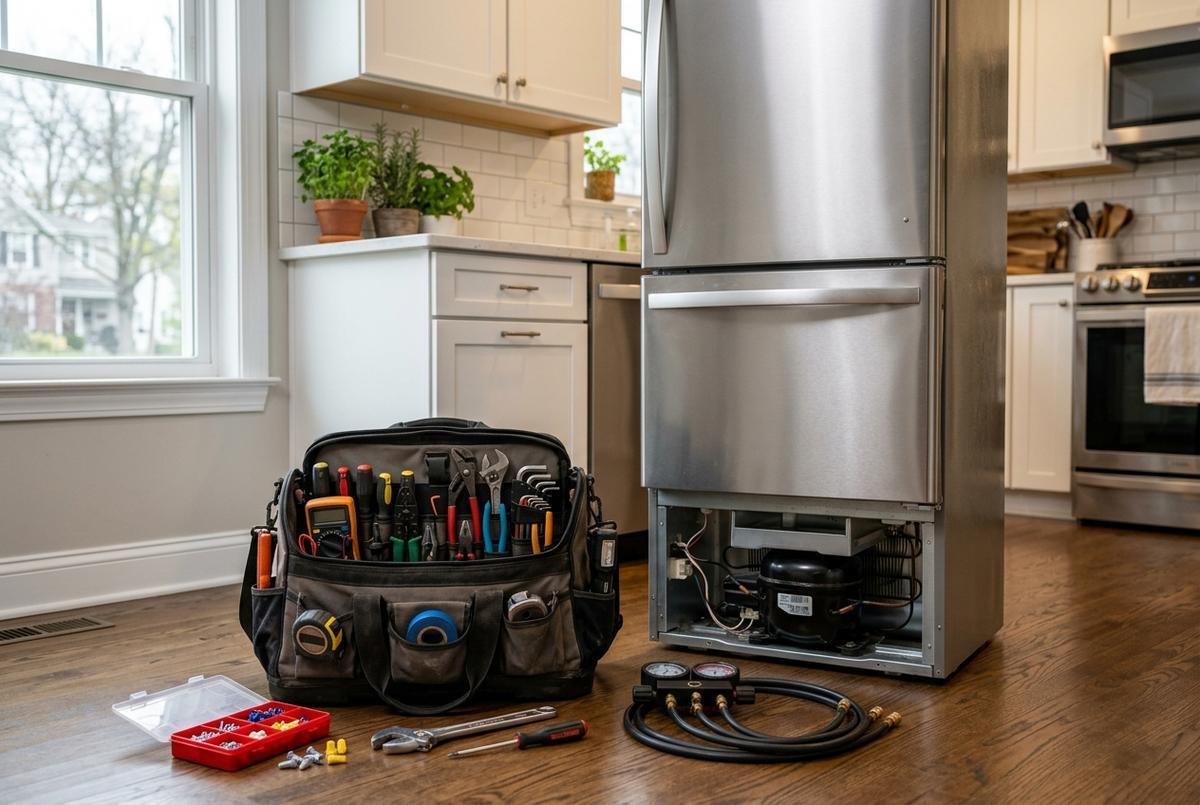
Surprise Appliance Repair service team · field-reviewed before publishing
Age matters, but not the way you think
Most refrigerators run somewhere in the 10 to 15 year range before major parts start giving out. Out here that clock runs faster. Summer heat and fine dust push a compressor harder than the same unit would work in a cooler climate, and garage units get it worst. So a 12-year-old fridge in Arizona has usually lived a rougher life than the number suggests. Age alone still doesn't decide anything. We've fixed 18-year-old units with a bad defrost timer, and we've sent 6-year-old units to the curb with a sealed system leak. What broke matters more than when it was built.
The fault type tells you most of the story
Some failures are simple wear items: door gaskets, thermostats, defrost heaters, evaporator fans, control boards, ice maker assemblies, water valves. Those are normal repairs on almost any age of refrigerator. Other failures live in the sealed system, meaning the compressor and the refrigerant loop, and that's a different conversation. A failed compressor on an older unit usually means the fridge is near the end of its useful life, and we'll say so plainly. When we diagnose, the first thing we're figuring out is which category you're in. That one answer usually points the decision.
Can we still get parts?
Manufacturers stop making parts for discontinued models. On older refrigerators, especially odd or discontinued lines, a control board or a specific shelf assembly may not exist anymore. We check availability before we recommend a repair, because a fix that depends on a part nobody stocks isn't a fix. Common brands and common models usually have decent parts support well past ten years. Built-in and panel-ready units are their own case. Parts can be harder to find, but replacing the whole unit means cabinet work, so repair often still makes sense even on an old one.
How we think about it on the visit
We start with the symptom you described and confirm it. Warm fresh food side with a cold freezer points one direction. Everything warm and the compressor silent points another. Ice piling up on the back wall points to defrost. We check airflow, coil condition, door seals, and whether the unit has spent the summer fighting a hot garage. Once we know the failure, we tell you what part is needed, whether it's available, and what shape the rest of the unit is in. Then you decide. If we think you're about to spend money on a fridge with more failures coming, we say that out loud.
When replacement is the honest answer
A few cases where we'll tell you to go shopping instead. A failed compressor or a refrigerant leak on a unit already past its expected life. Rust through the cabinet, or a warped liner that won't hold a seal. A discontinued part with no supply. Several unrelated failures stacking up in the same year. And a fridge that has run in a 115-degree garage for a decade may simply be worn out everywhere at once. Newer units pull less power too, which matters if yours runs nonstop in July. Call us and we'll help you figure out which side of the line yours is on.
Is an Older Refrigerator Worth Repairing? How to Decide — common questions
Is it worth fixing a refrigerator over 15 years old?
Sometimes. A gasket, fan, or thermostat is a reasonable repair at any age. A sealed system or compressor failure at 15 years usually isn't. The fault type decides it, not the birthday.
Does the desert heat really shorten a fridge's life?
It does. Higher room temperatures mean longer run times, and dust on the condenser coils traps heat around the compressor. Garage refrigerators take the worst of it and generally wear out sooner than kitchen units.
Can I do anything myself before calling?
Safe checks only. Make sure food isn't blocking the vents inside, confirm the door seals shut, and vacuum accessible dust off the outside. Skip anything behind a panel or near wiring.
How it works
- Step 1
Tell us the symptom
Call us or fill in the form and describe what you hear, smell, or see. Water on the floor. A clicking compressor, a burning odor. Small details narrow the cause before anyone drives out.
- Step 2
We schedule the visit
You pick a window that fits your day, and we confirm the make and model so common parts ride along in the van. Tell us if the unit sits in the garage or on the patio. Heat changes what we check first.
- Step 3
Diagnose and repair
Our technician tests the unit, explains what failed, and lays out your options in plain words. Most repairs finish that same visit. If a part has to be ordered, you'll know before we leave.
- A real person answers
- Open 7 days
- Written quote before work starts
Why homeowners call us
- Built for desert heatSummer here punishes appliances. Compressors run long, coils choke on fine dust, and garage refrigerators fight ambient air near 115 degrees. We look for heat-driven failures first, because that's usually where the trouble started.
- Any major brandWe work as an independent company on all major residential brands: refrigerators, washers, dryers, dishwashers, ranges, ovens, and freezers. One crew handles both the kitchen and the laundry room, so you aren't juggling separate calls.
- Straight explanationsYou hear what part failed and why, without a wall of jargon. If a repair doesn't make sense on an aging unit, we say that too. Then you're deciding with real information instead of guesswork.
- Six-state coverageFrom Surprise out across the Southwest, our service area covers six states. The approach doesn't change from town to town: careful diagnosis, a tidy work area, and a clear plan before we start pulling anything apart.
- All major brands, gas & electricEvery major appliance brand, gas and electric, handled by an independent shop.
- Straight answersIf it isn't worth repairing, we'll say so, often right on the phone.
About this guide
If the safe checks didn't fix it, the fault is real
Tell us what you tried and what it did. The booking itself takes a minute.
- A real person answers
- Open 7 days
- Written quotes
- All major brands
- Gas & electric
Rather not call? Get a free quote →