Top-rated independent appliance repair across the Southwest
The Coil-Cleaning Habit That Saves Refrigerators
If your fridge is running long, the kitchen feels warm, and the ice cream has gone soft, start by cleaning the condenser coils. Nine times out of ten in this desert, nothing is broken yet. The coils are packed with dust, pet hair, and the fine grit that blows through every Arizona house. Cleaning them takes about five minutes. Here's how it works.
Call (888) 352-5066- A real person answers
- Open 7 days
- Written quote before work starts
Taking calls until 5:00 PM MST
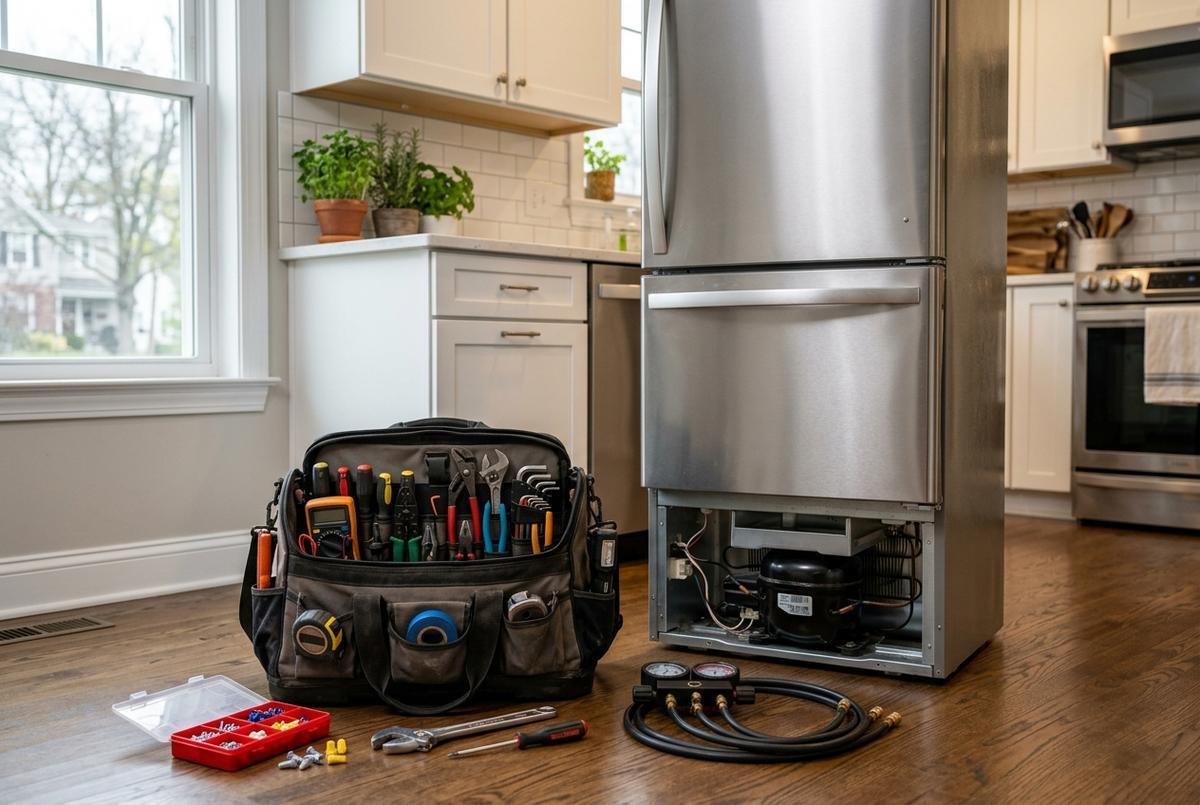
Surprise Appliance Repair service team · field-reviewed before publishing
What dust actually does to your fridge
Condenser coils dump heat out of the fridge and into your kitchen. When a gray blanket of dust covers them, that heat has nowhere to go, so the compressor keeps running to make up the difference. It runs longer. Then it barely stops at all. Heat is the enemy of a compressor. Running hot for months wears the motor windings and cooks the start components, and a fridge that could have gone years quits early instead. In a Surprise garage in July, where the ambient air is already brutal, dirty coils push the system past what it was built to handle. The failure feels sudden. The cause took two years.
The five-minute habit
Unplug the refrigerator first. Always. Most fridges have coils behind a snap-off grille at the bottom front, or exposed on the back. The bottom grille pops off by hand, no tools and no wiring involved. Pull it straight off. Use a coil brush or the crevice tool on your vacuum and work the dust out gently. Don't jam the brush or bend the thin metal fins. Vacuum the floor underneath while you're down there, since that dust gets pulled right back in. Snap the grille back on and plug the fridge in. That's the whole job. If the coils are on the back and the fridge is heavy, slide it out slowly on cardboard so you don't gouge tile.
How often, and why the desert changes the answer
Twice a year works for most kitchens, and spring and fall are easy to remember. Out here, bump it up. Homes near open desert or new construction pull in fine dust constantly, and pets shed year-round. A garage or patio refrigerator lives in blowing grit and 115-degree air, so quarterly is more realistic for those. Go more often if you see dust bunnies at the base grille, if the fridge feels hot along the sides, or if you can hear the condenser fan straining. Check the door gaskets while you're there. Wipe them with warm water. A sticky seal leaks cold air and makes the compressor work just as hard as dirty coils do.
Warning signs prevention won't fix anymore
Cleaning helps a struggling fridge. It won't revive a failing one. Call for service when the compressor runs constantly and the food still isn't cold, or when the freezer holds but the fresh food side drifts warm. A clicking sound every few minutes, on, click, off, usually means the compressor is trying to start and can't. Water pooling under the crisper, frost building on the back wall of the freezer, or a fridge that's warm after a full day of running are all past the DIY stage. One more. If you smell something hot or electrical near the back, unplug it and stop. Don't investigate behind panels. Call us.
What we check when coils aren't the whole story
We start where you left off: coil condition, condenser fan operation, and airflow around the cabinet. Then we go further. We test the evaporator fan, check defrost operation, read temperatures in both compartments, and look at how the compressor is drawing power. Sealed-system and electrical work needs proper tools and recovery equipment, and that's the line between homeowner maintenance and a service call. We repair all major brands as an independent shop, so we're not steering you toward one manufacturer's answer. Often the fix is a fan motor, a defrost component, or a control board. Sometimes it's genuinely the compressor, and we'll tell you plainly. Reach us.
The Coil-Cleaning Habit That Saves Refrigerators — common questions
Can I clean coils without moving the refrigerator?
Usually yes. Most newer fridges have coils behind a snap-off grille at the bottom front. Unplug the unit, pull the grille off by hand, and vacuum. Only back-coil models need to be slid out.
Will cleaning the coils fix a fridge that's already warm?
Sometimes. If dust was the only problem, temperatures often recover within a day. If it's still warm after 24 hours, something else has failed and it needs a technician.
Does a garage refrigerator need different care?
Yes. Garage units breathe hot, dusty air all summer. Clean the coils about every three months, keep several inches of clearance around the cabinet, and don't stack boxes against the back.
How it works
- Step 1
Tell us the symptom
Call us or fill in the form and describe what you hear, smell, or see. Water on the floor. A clicking compressor, a burning odor. Small details narrow the cause before anyone drives out.
- Step 2
We schedule the visit
You pick a window that fits your day, and we confirm the make and model so common parts ride along in the van. Tell us if the unit sits in the garage or on the patio. Heat changes what we check first.
- Step 3
Diagnose and repair
Our technician tests the unit, explains what failed, and lays out your options in plain words. Most repairs finish that same visit. If a part has to be ordered, you'll know before we leave.
- A real person answers
- Open 7 days
- Written quote before work starts
Why homeowners call us
- Built for desert heatSummer here punishes appliances. Compressors run long, coils choke on fine dust, and garage refrigerators fight ambient air near 115 degrees. We look for heat-driven failures first, because that's usually where the trouble started.
- Any major brandWe work as an independent company on all major residential brands: refrigerators, washers, dryers, dishwashers, ranges, ovens, and freezers. One crew handles both the kitchen and the laundry room, so you aren't juggling separate calls.
- Straight explanationsYou hear what part failed and why, without a wall of jargon. If a repair doesn't make sense on an aging unit, we say that too. Then you're deciding with real information instead of guesswork.
- Six-state coverageFrom Surprise out across the Southwest, our service area covers six states. The approach doesn't change from town to town: careful diagnosis, a tidy work area, and a clear plan before we start pulling anything apart.
- All major brands, gas & electricEvery major appliance brand, gas and electric, handled by an independent shop.
- Straight answersIf it isn't worth repairing, we'll say so, often right on the phone.
About this guide
If the safe checks didn't fix it, the fault is real
Mention which checks you ran when you book; it speeds up the visit.
- A real person answers
- Open 7 days
- Written quotes
- All major brands
- Gas & electric
Rather not call? Get a free quote →