Top-rated independent appliance repair across the Southwest
Which Oven Repairs Are Worth Doing
Most oven problems come down to one replaceable part, and we can tell you which on the first visit. Maybe it quit mid-dinner. Maybe it heats but everything comes out pale and half-raw, and now you're standing in the kitchen wondering whether to fix it or start shopping. Here's how we think about that question in plain terms, so you can decide before anyone shows up with a toolbag.
Call (888) 352-5066- A real person answers
- Open 7 days
- Written quote before work starts
Taking calls until 5:00 PM MST
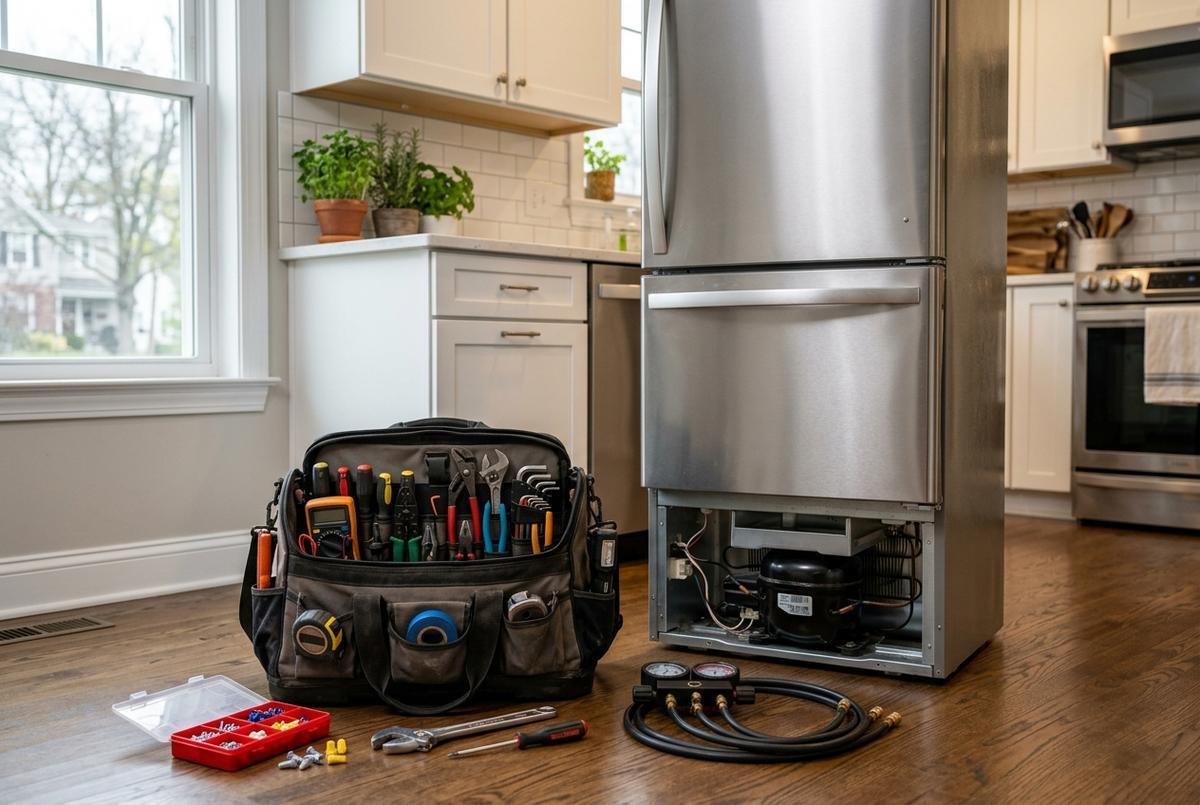
Surprise Appliance Repair service team · field-reviewed before publishing
Age matters, but not the way you think
A ten-year-old wall oven isn't automatically done. Ovens are simple compared to a refrigerator: heating elements, a thermostat sensor, an igniter, a control board, a door latch. Those parts fail one at a time, and replacing one doesn't stress the rest. What matters more is whether the unit has already had two or three unrelated failures in a short stretch. That pattern usually points to heat and time working on everything at once. Out here kitchens run hot in summer, and an oven that lives near a west-facing window works harder to hold temperature. Age alone is a weak signal. Failure history is a strong one.
The fault type tells you most of the story
Some failures are routine. A bake element that burned through and left a visible break. An igniter that glows but never opens the gas valve. A temperature sensor drifting so the oven runs cold, or a broken door hinge letting heat escape. Those are contained repairs on parts made to be replaced. Other failures run deeper: cracked porcelain in the cavity, a warped frame, rust behind the liner, a control board that's discontinued. Wiring baked brittle across the whole harness is another one. When the problem is the body of the oven rather than a component bolted to it, repair stops making sense.
Whether the part still exists
This one ends more conversations than anything else. Elements and sensors are widely stocked and cross many models. Control boards and touch panels are model-specific, and manufacturers stop making them. A discontinued board sometimes turns up refurbished, sometimes it doesn't turn up at all. Door glass and trim for older wall ovens can be just as scarce. We check availability before we quote work, not after. If the part is gone, we say it's gone instead of chasing a lead for three weeks while you cook on a hot plate. Common parts on a common brand, straightforward repair. Rare board on a fifteen-year-old model, different conversation.
What we actually do on the visit
We run the oven and watch it. Does the bake element glow evenly? Does the broiler come on? Does the igniter glow and stay glowing without the burner lighting? We compare the temperature it actually reaches to what the display claims. We look at the door seal and hinges, since a sagging door explains a lot of uneven baking. We test the sensor's resistance. Then we look up the failed part and check stock. You get the finding, the part situation, and our honest read on whether this unit has more life in it. No work happens until you say go. Call us to set that up.
When we'd tell you to replace it
Rust through the oven floor or a cracked cavity liner. We won't repair around a compromised cooking chamber. A discontinued control board with no refurbished source is another stopping point. So is a wall oven where the cutout has shifted or the cabinet is damaged and the unit no longer sits square. Multiple simultaneous failures on a unit already past a decade, where fixing one just exposes the next. Also gas ranges with a burner or valve problem plus a separate oven fault, since that's two systems failing at once. We'd rather say so on the first visit than take three trips to reach the same answer.
When it is time to book
Which Oven Repairs Are Worth Doing — common questions
My oven bakes unevenly. Is that a repair or a lost cause?
Usually a repair. Uneven baking most often traces to a failing temperature sensor, a weak element, or a door that no longer seals. All three are replaceable parts. We verify actual cavity temperature before deciding anything.
Does a broken digital display mean the whole oven is done?
Not always. Displays and control boards are separate on some models, so the fix may be smaller than it looks. The real question is whether the board is still manufactured. We check part availability first.
Should I fix a builder-grade oven or upgrade?
If the fault is a single common part, repair is reasonable no matter the grade. Wall ovens especially, since swapping one means matching a cabinet cutout. That install cost pushes many people toward repairing what already fits.
How it works
- Step 1
Tell us the symptom
Call us or fill in the form and describe what you hear, smell, or see. Water on the floor. A clicking compressor, a burning odor. Small details narrow the cause before anyone drives out.
- Step 2
We schedule the visit
You pick a window that fits your day, and we confirm the make and model so common parts ride along in the van. Tell us if the unit sits in the garage or on the patio. Heat changes what we check first.
- Step 3
Diagnose and repair
Our technician tests the unit, explains what failed, and lays out your options in plain words. Most repairs finish that same visit. If a part has to be ordered, you'll know before we leave.
- A real person answers
- Open 7 days
- Written quote before work starts
Why homeowners call us
- Built for desert heatSummer here punishes appliances. Compressors run long, coils choke on fine dust, and garage refrigerators fight ambient air near 115 degrees. We look for heat-driven failures first, because that's usually where the trouble started.
- Any major brandWe work as an independent company on all major residential brands: refrigerators, washers, dryers, dishwashers, ranges, ovens, and freezers. One crew handles both the kitchen and the laundry room, so you aren't juggling separate calls.
- Straight explanationsYou hear what part failed and why, without a wall of jargon. If a repair doesn't make sense on an aging unit, we say that too. Then you're deciding with real information instead of guesswork.
- Six-state coverageFrom Surprise out across the Southwest, our service area covers six states. The approach doesn't change from town to town: careful diagnosis, a tidy work area, and a clear plan before we start pulling anything apart.
- All major brands, gas & electricEvery major appliance brand, gas and electric, handled by an independent shop.
- Straight answersIf it isn't worth repairing, we'll say so, often right on the phone.
About this guide
Checked everything on the list and it still acts up?
Tell us what you tried and what it did. The booking itself takes a minute.
- A real person answers
- Open 7 days
- Written quotes
- All major brands
- Gas & electric
Rather not call? Get a free quote →