Top-rated independent appliance repair across the Southwest
Repairing a Built-In Microwave
Your built-in microwave quit heating. Or the turntable stopped. Or the door latch feels loose and the whole thing plays dead. Now you're staring at a unit trimmed into cabinetry, wondering if it's worth a service call or if you should start measuring for a new one. Here's how we actually sort that out, in plain terms.
Call (888) 352-5066- A real person answers
- Open 7 days
- Written quote before work starts
Taking calls until 5:00 PM MST
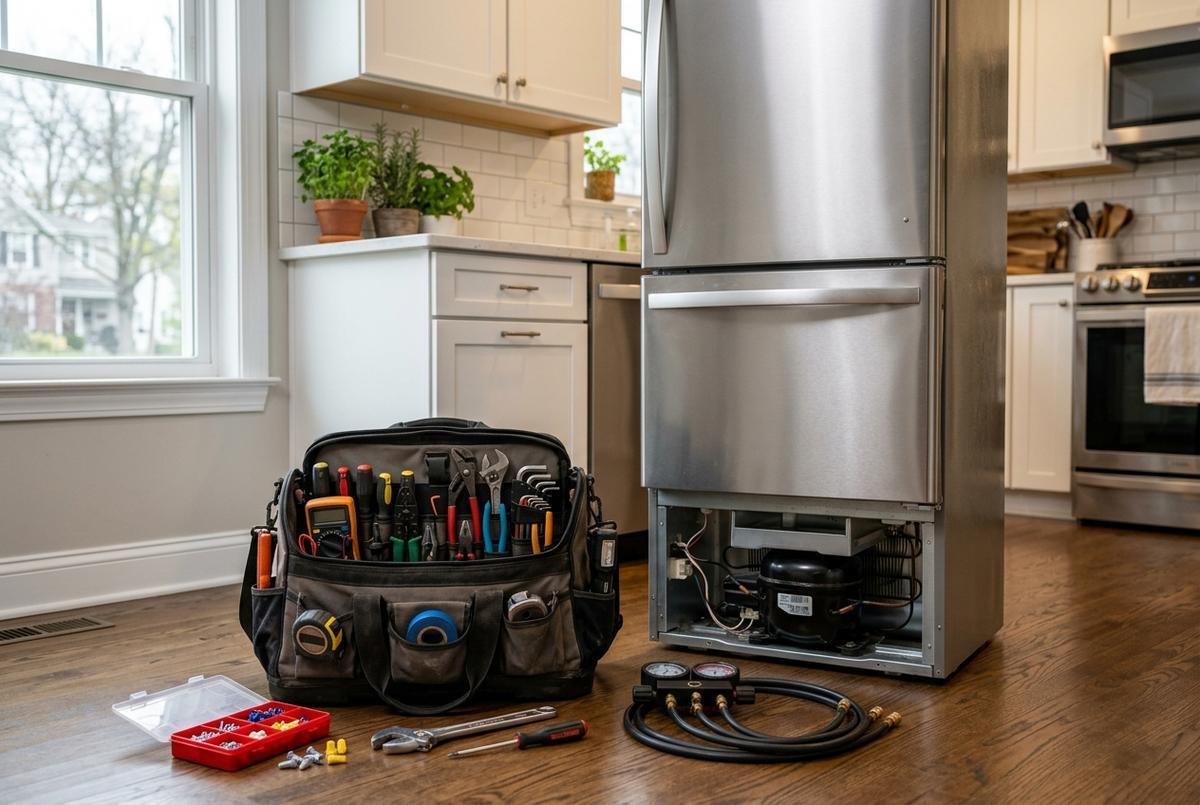
Surprise Appliance Repair service team · field-reviewed before publishing
Age matters, but not the way you'd think
A built-in microwave that's under about eight years old is usually a good repair candidate. Parts still move through supply channels, and the cabinet, the door, and the transformer are usually still sound. Past twelve years, we start looking harder. Not because the unit is doomed, but because parts get scarce and other components are wearing at the same rate. Over-the-range models in Arizona kitchens take extra abuse. They pull hot air off the cooktop, and in a house that runs warm nine months a year, the internal fan and electronics never get a real break. Age plus heat exposure tells us more than age alone.
The fault itself decides most of it
Some failures are routine. A bad door switch, a burned-out turntable motor, a control panel that's gone unresponsive, a broken door handle or latch. These are contained problems with defined parts. Fix one, and the rest of the unit keeps going. Other failures run deeper. When the high-voltage side has failed and taken related components with it, or when the cavity itself is rusted through or arcing at the waveguide cover, we're no longer fixing one thing. We tell you which category you're in before anything gets ordered. That single distinction usually settles the question on its own.
Whether we can actually get the part
Built-in and over-the-range models depend on model-specific parts. Trim kits, door assemblies, and control boards rarely cross between manufacturers. We look up your model and serial before promising anything. If a board is discontinued and no rebuilt stock exists, repair stops being an option no matter how healthy the rest of the unit is. This hits older builder-grade units hardest. On the other side, common wear parts for popular models are widely stocked and arrive quickly. As an independent shop we source from multiple suppliers, which helps, but nobody can conjure a part that's out of production.
What we do on the visit
We start with what you noticed. Does it run and not heat, or not run at all? Any noise, smell, or sparking? Then we check the simple things: power at the outlet, the door catching properly, vent airflow, and whether the cabinet cutout is choking the exhaust. Dust buildup on vents is common here and can cause overheat shutdowns that look like a failed unit. From there we test components in a defined order. When we know the fault, we tell you the repair path, the part situation, and whether we'd fix it ourselves in your position. Straight answer, no pressure.
Times we tell you to replace it
Rust inside the cavity, or scorching around the waveguide cover, means the seal integrity is questionable. Replace it. A discontinued control board with no aftermarket equivalent, replace. Multiple failures stacking up on a unit past its first decade, replace. Also worth knowing: if you're remodeling the kitchen within a year or two, a repair on a very old built-in may just buy time you don't need. We'd rather say that up front than sell you a part. Give us a call with your model number handy and we can often narrow it down before we ever roll a truck.
When it is time to book
Related guides
Repairing a Built-In Microwave — common questions
My microwave runs but doesn't heat food. Is that fixable?
Often yes. That symptom points at the high-voltage circuit or a door switch. Some of those components are straightforward replacements; others come as an assembly. We test to find which before recommending anything.
Can I just swap a built-in myself?
Sometimes, if you find an exact-fit replacement. Built-ins depend on cutout dimensions and trim kits, and matching them is harder than it looks. Over-the-range units also involve venting and mounting hardware overhead.
Does desert dust actually affect a microwave?
It does. Dust and grease clog vent grilles and cooling paths, so internal parts run hotter than designed. That shortens component life and can trigger thermal shutdowns that mimic real failures. Cleaning vents regularly helps.
How it works
- Step 1
Tell us the symptom
Call us or fill in the form and describe what you hear, smell, or see. Water on the floor. A clicking compressor, a burning odor. Small details narrow the cause before anyone drives out.
- Step 2
We schedule the visit
You pick a window that fits your day, and we confirm the make and model so common parts ride along in the van. Tell us if the unit sits in the garage or on the patio. Heat changes what we check first.
- Step 3
Diagnose and repair
Our technician tests the unit, explains what failed, and lays out your options in plain words. Most repairs finish that same visit. If a part has to be ordered, you'll know before we leave.
- A real person answers
- Open 7 days
- Written quote before work starts
Why homeowners call us
- Built for desert heatSummer here punishes appliances. Compressors run long, coils choke on fine dust, and garage refrigerators fight ambient air near 115 degrees. We look for heat-driven failures first, because that's usually where the trouble started.
- Any major brandWe work as an independent company on all major residential brands: refrigerators, washers, dryers, dishwashers, ranges, ovens, and freezers. One crew handles both the kitchen and the laundry room, so you aren't juggling separate calls.
- Straight explanationsYou hear what part failed and why, without a wall of jargon. If a repair doesn't make sense on an aging unit, we say that too. Then you're deciding with real information instead of guesswork.
- Six-state coverageFrom Surprise out across the Southwest, our service area covers six states. The approach doesn't change from town to town: careful diagnosis, a tidy work area, and a clear plan before we start pulling anything apart.
- All major brands, gas & electricEvery major appliance brand, gas and electric, handled by an independent shop.
- Straight answersIf it isn't worth repairing, we'll say so, often right on the phone.
About this guide
Past the safe checks, it's a job for tools and a meter
Bring your notes from the checks to the call and booking takes no time.
- A real person answers
- Open 7 days
- Written quotes
- All major brands
- Gas & electric
Rather not call? Get a free quote →